Diet Meal Delivery Platform with Corporate Subscriptions
Client: ProCalories
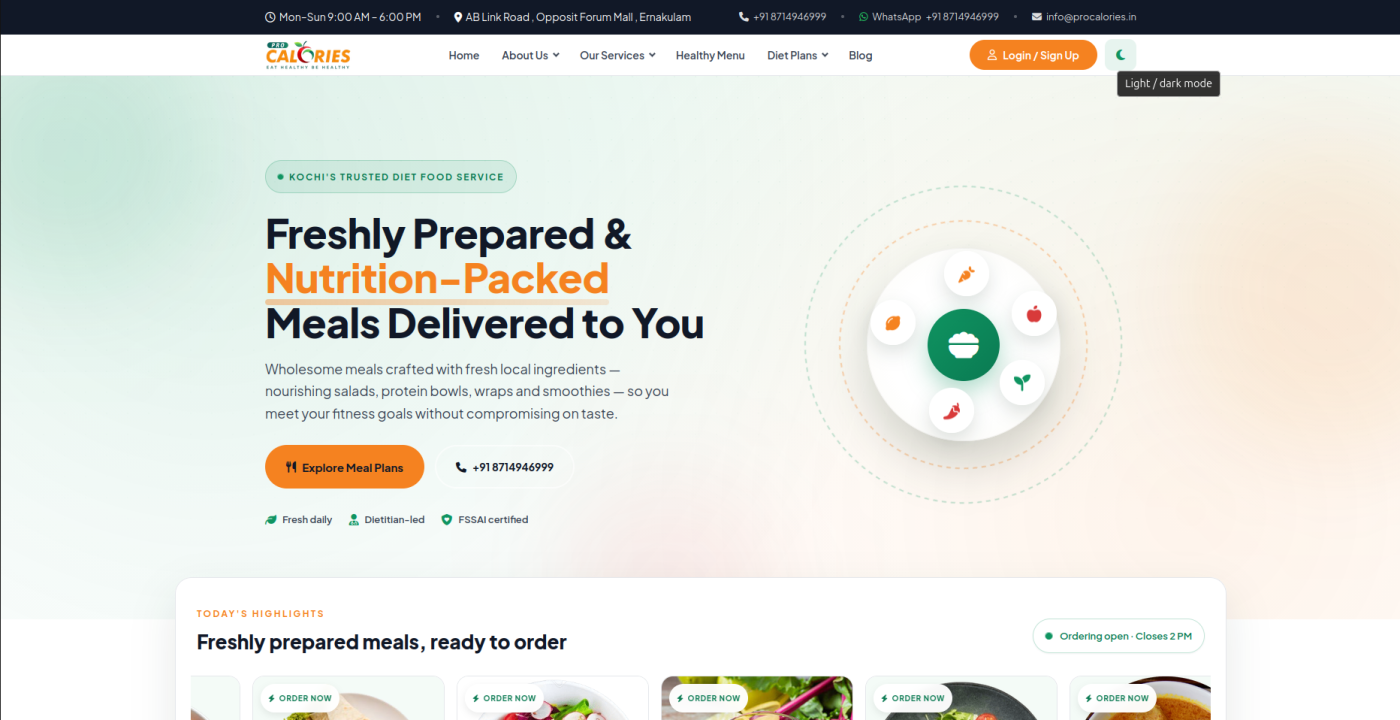
A dietitian-led meal delivery business running three different sales models from one system — à la carte ordering from a 203-item menu, multi-week subscription diet plans, and shift-based corporate delivery to employees at their workplace.
Key outcomes
Inside the system
The Problem
ProCalories sells the same thing — a prepared meal — through three business models that behave nothing alike.
- À la carte. Someone browses a 203-item menu and orders lunch. This is ordinary food e-commerce, except that the kitchen has a cut-off time and stock is finite.
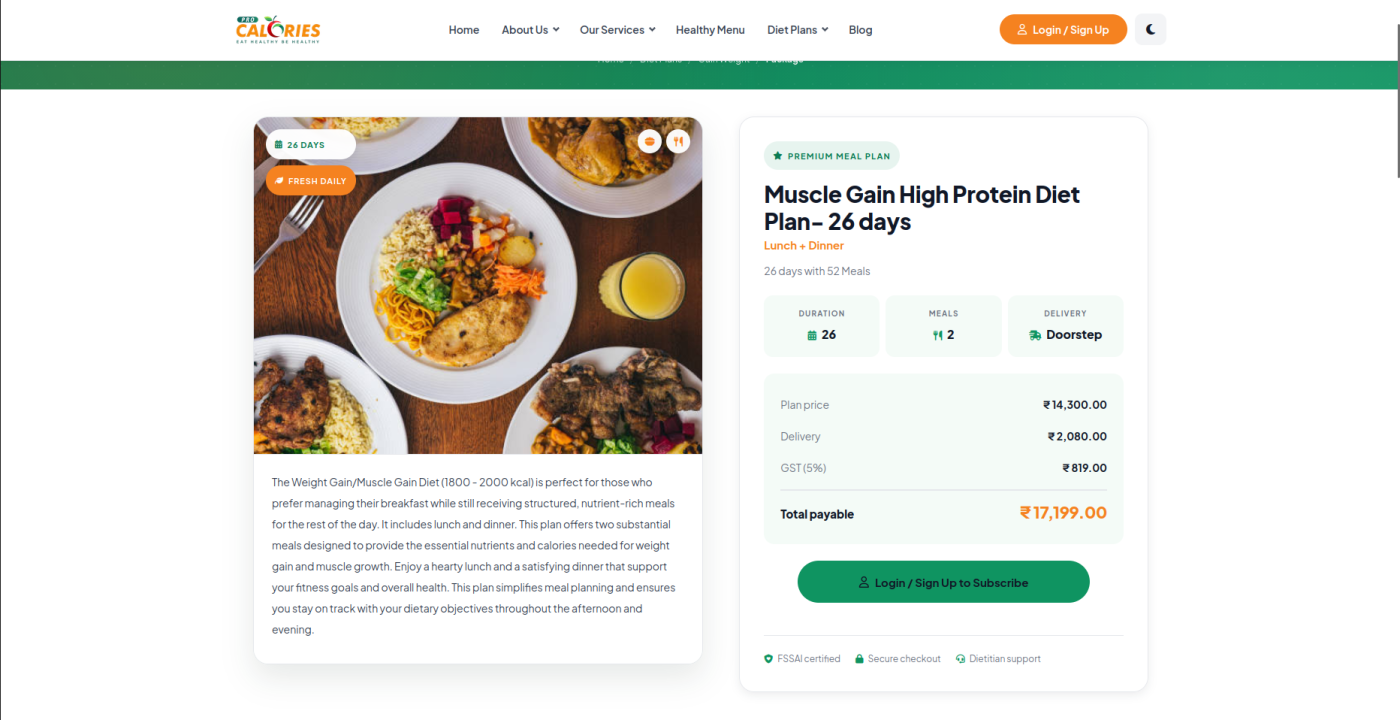
- Subscription diet plans. Someone buys a 26-day muscle gain plan with 52 meals. This is not a cart checkout — it is a schedule that has to be built, priced, delivered daily for weeks, and adjusted mid-flight when the customer wants a meal swapped or flags an allergy.
- Corporate contracts. An employer feeds 61 staff across shifts, and each employee has their own assigned meal on a given day. The buyer and the eater are different people, and the delivery is one drop serving dozens of individual entitlements.
Off-the-shelf food delivery software handles the first case competently and collapses on the other two. Running them separately is worse: the same kitchen, the same stock and the same GST return end up spread across three systems that disagree with each other by lunchtime.
The Solution
One platform, with the ordering model as a first-class distinction rather than a workaround.
Storefront that respects the kitchen
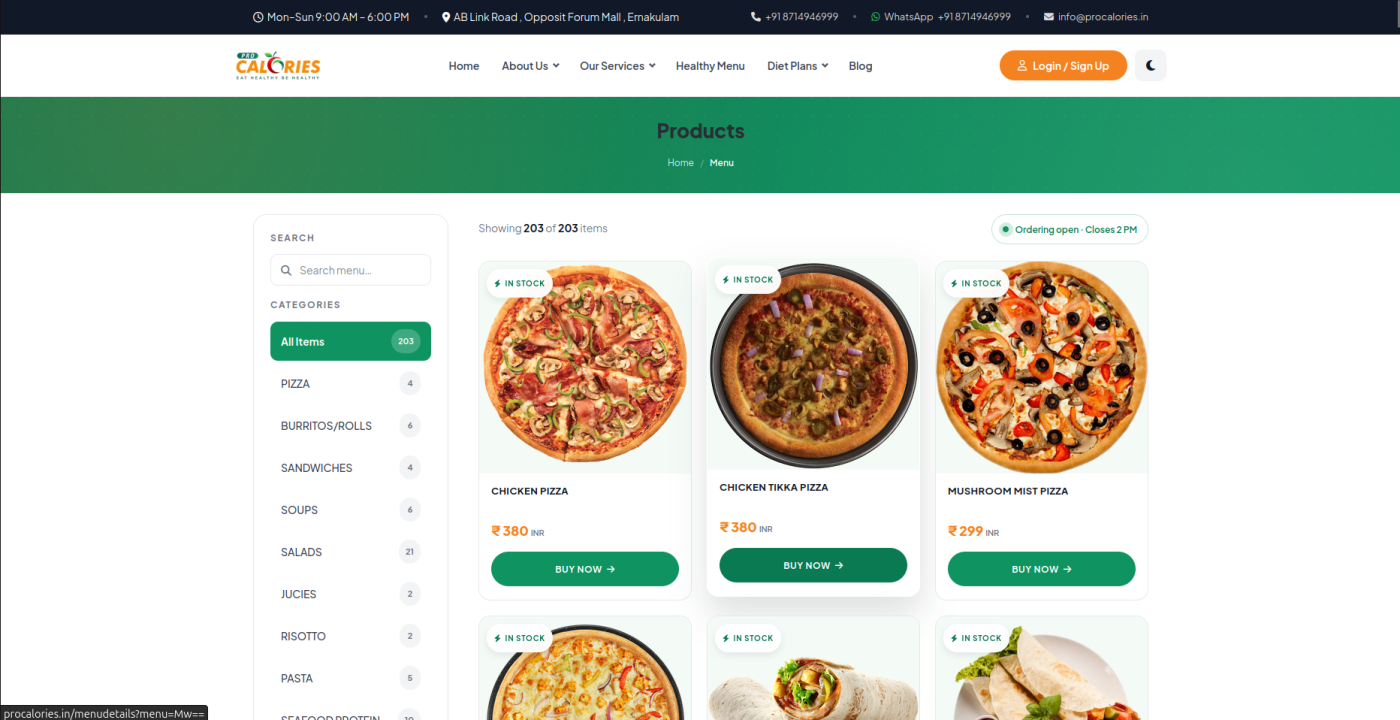
The public menu carries 203 items across categories — salads, protein bowls, wraps, soups, pasta, juices — each with live stock status and a price. An ordering window is shown prominently and closes at 2 PM, because a kitchen preparing food fresh each day cannot accept orders indefinitely. That single constraint is what most generic ordering plugins get wrong.
Diet plans as products, not carts
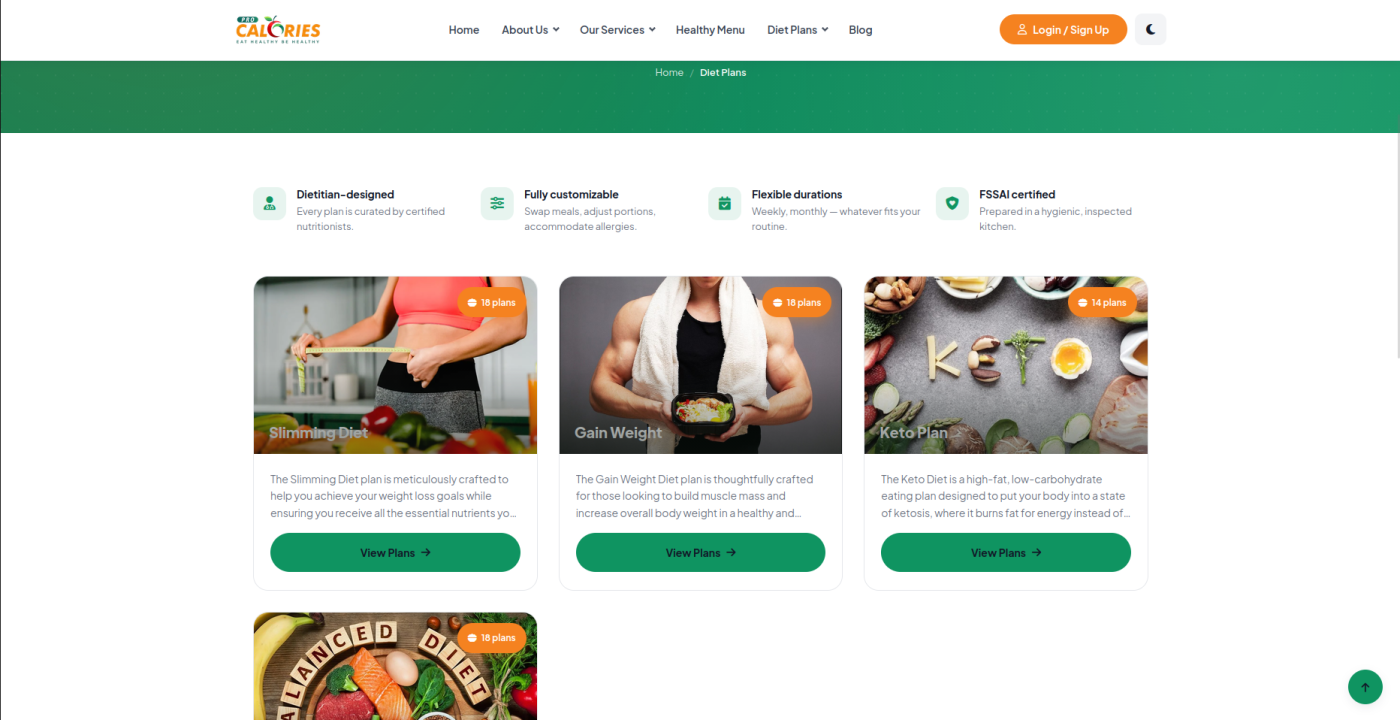
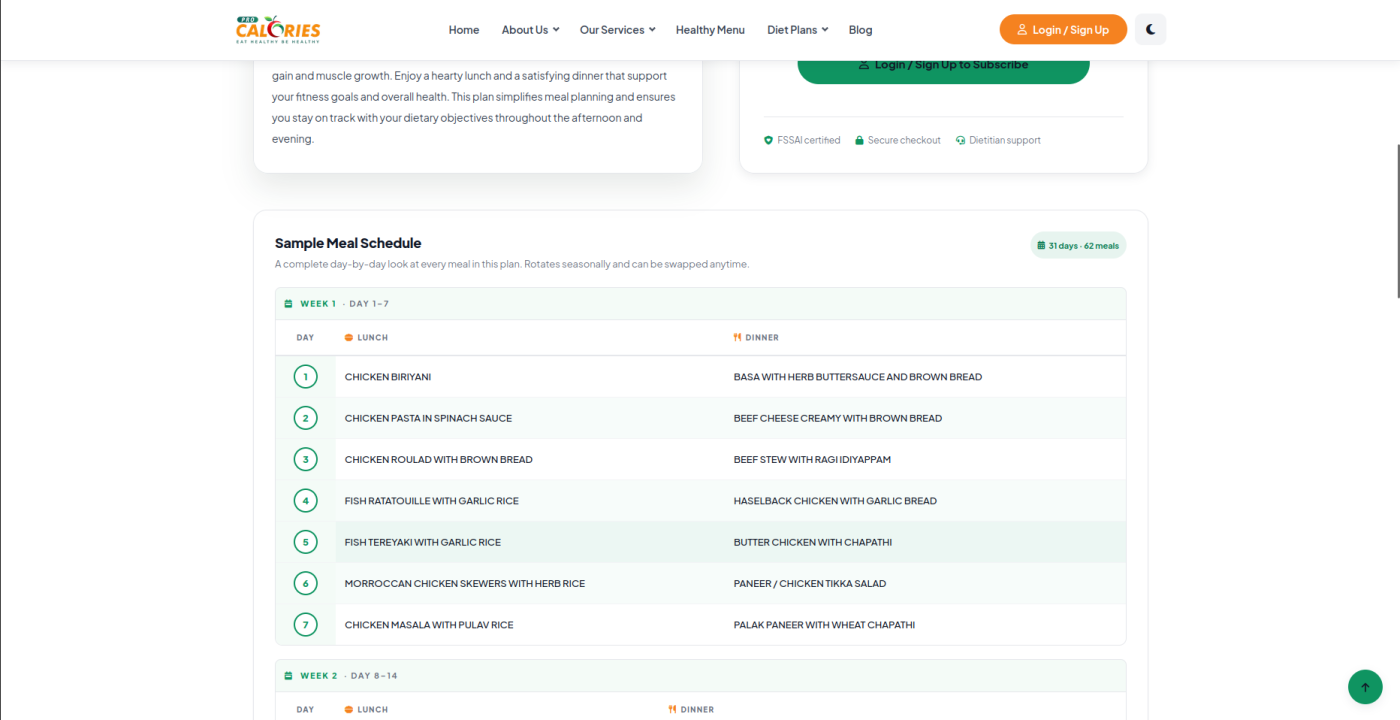
Four tracks — Slimming, Gain Weight, Keto and Balanced — hold 68 plans between them. Each plan is defined by duration, meal count and combination (breakfast, lunch, dinner or a subset), and publishes its full day-by-day schedule before purchase: 31 days, 62 meals, every lunch and dinner listed. Customers buying four weeks of food in advance want to see exactly what arrives, and showing it removes the largest objection to subscribing.
Pricing is itemised rather than bundled — plan price, delivery charge, and 5% GST shown separately before the total payable — which matters for corporate buyers who need the tax line and for consumers deciding between plan lengths.
Corporate accounts and shift-based delivery
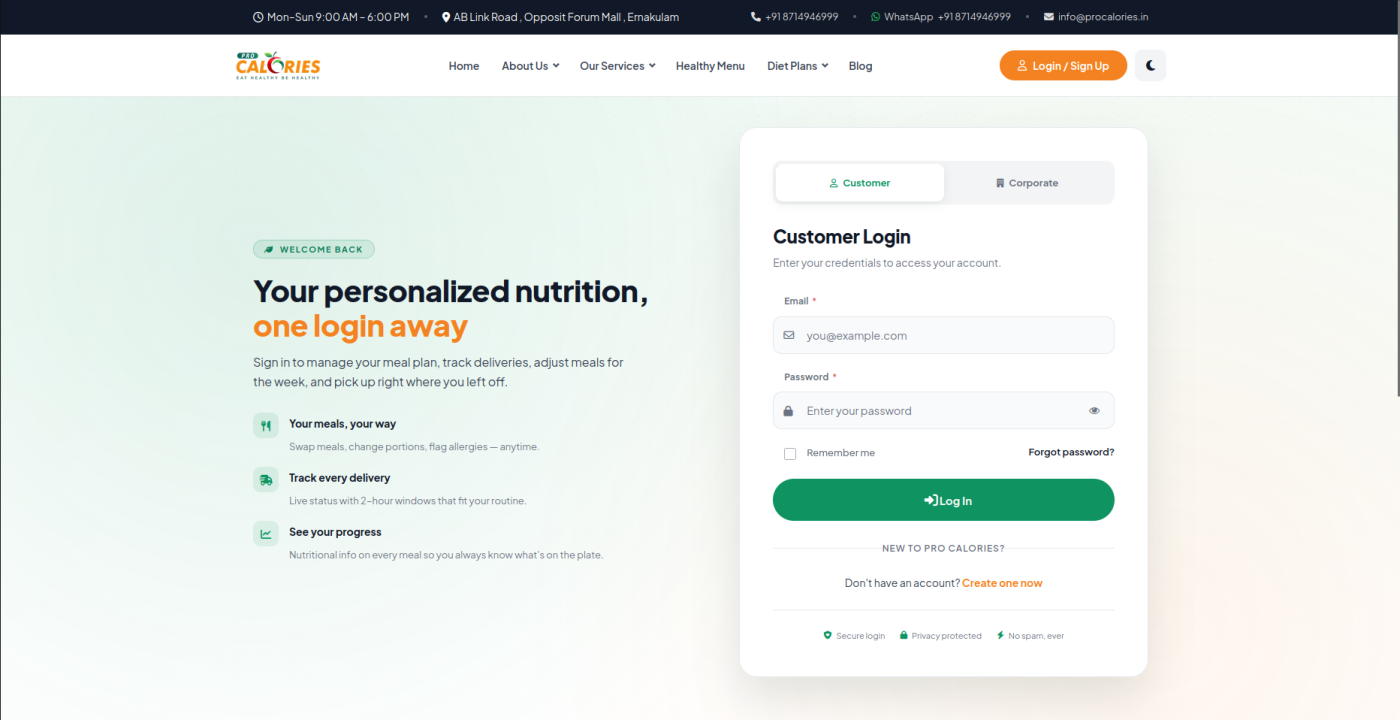
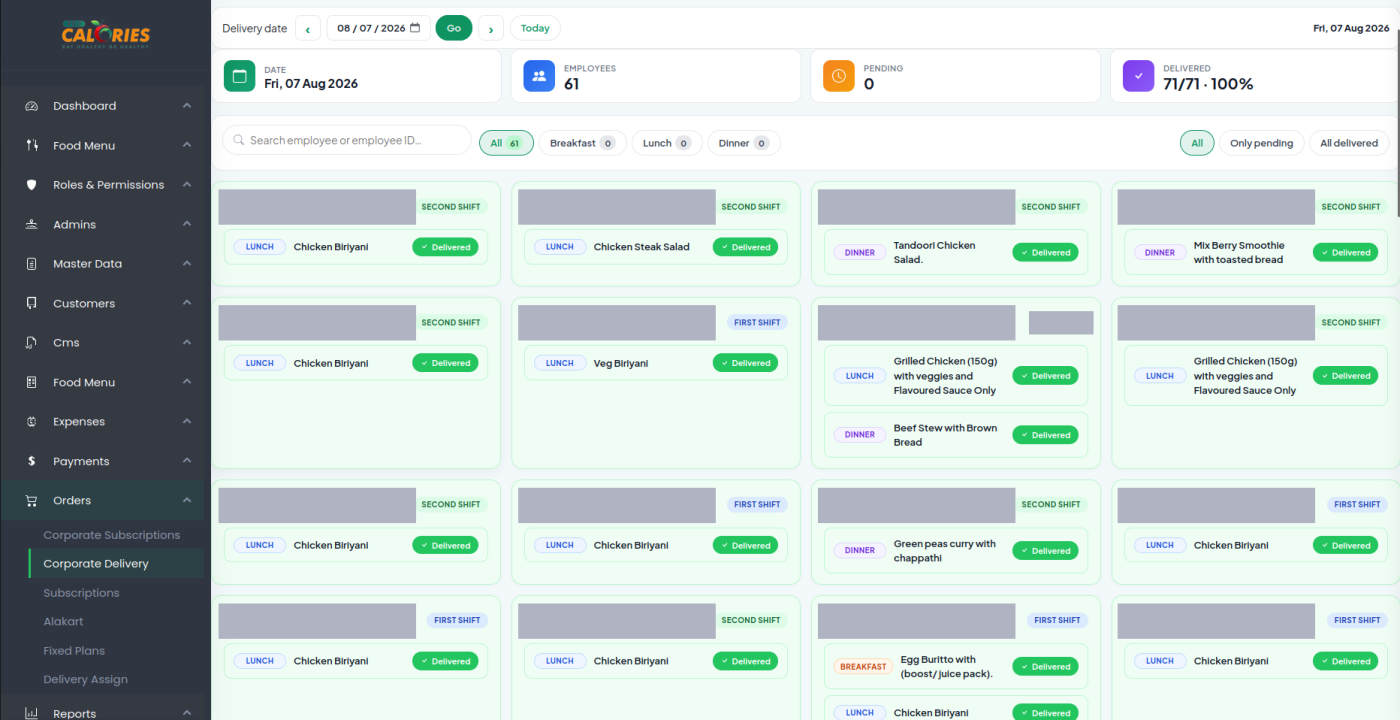
Corporate is a separate account type from the sign-in screen onward. The delivery board works by day rather than by order: pick a date and see every employee due a meal, grouped by shift, with their individual assignment and its delivered or pending state — 61 employees and 71 meals on the day pictured, tracked to completion.
This is the part that makes the corporate business viable. A delivery driver arriving at an office with a crate needs to know whose meal is whose, and the office administrator needs to see that everyone on the second shift actually got fed.
Back office built around the order types
Orders divide into corporate subscriptions, corporate delivery, individual subscriptions, à la carte, fixed plans and delivery assignment — each a distinct workflow rather than a status field on one generic order. Around them sit the food menu and master data, customers, roles and permissions, payments, expenses, meal orders, a CMS, reporting, and GST reports produced from the same records that took the money.
The Outcome
The platform is live at procalories.in, running all three sales models from a single system: consumer ordering against a live menu, multi-week diet subscriptions with published schedules, and corporate shift delivery tracked per employee.
The practical result is that the kitchen works from one view of what to cook, the delivery team works from one view of where it goes and to whom, and the GST return is generated from the same records rather than reconciled across three tools afterwards.
Tech stack
A note on the screenshots
The corporate delivery board has been redacted before publication — employee names, employee IDs and mobile numbers are covered. Those are the client's customers' staff, and what a named individual ate on a given day is not something a portfolio needs to show. The shift structure and delivery tracking are left visible because they carry the story without identifying anyone.
What generalises
Any business selling the same product to consumers and to companies eventually hits this problem, and the common mistake is to model the corporate case as "a consumer order with more line items". It is not. The buyer, the payer, the recipient and the delivery address are four different things, and entitlements belong to individuals inside an account that someone else pays for.
Getting that right early is much cheaper than retrofitting it, and it is usually the difference between a corporate contract being profitable and being administered by hand in a spreadsheet.
Have a similar project in mind?
Let's talk about your requirements. Free 30-minute discovery call.
Start a ProjectMore case studies
School ERP Platform for 7+ Institutions in Kerala
Full-featured school management platform with 75+ modules serving 7+ Kerala institutions across CBSE, ICSE, an...
Web ApplicationLegal Practice Management System
Secure Laravel-based case management system with document handling, client tracking, and a 5-star security aud...
POS SystemRestaurant POS & Digital Menu System
Order management, kitchen display, digital QR menu, and GST-compliant billing — rolled out across 4 outlets in...